
Roundtable Calls for Urgent Action on Tribal Land Rights, Employment and PESA Safeguards
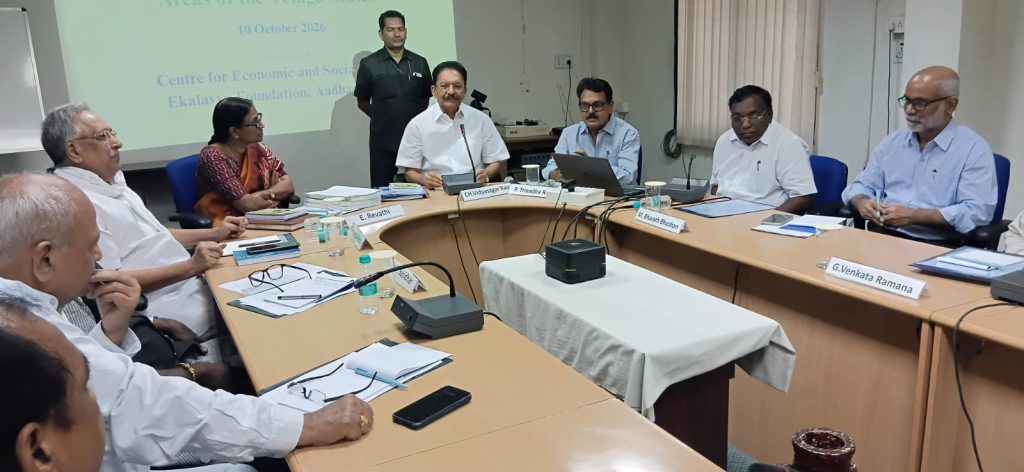
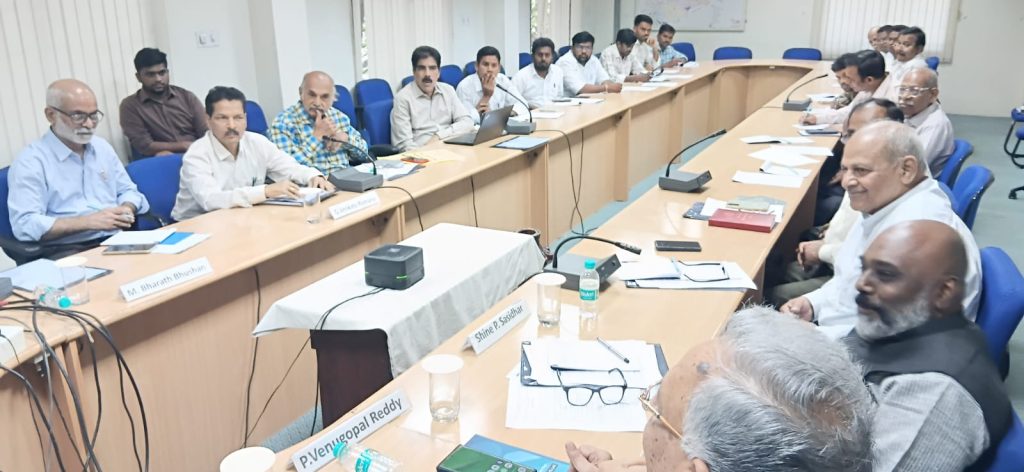
A roundtable on “Constitutional Safeguards for Tribals in Fifth Schedule Areas in the Telugu States” was jointly organised by the Ekalavya Foundation, Aadhar Society and the Centre for Economic and Social Studies (CESS) on October 10, 2026, at CESS. The roundtable was held in the context of recent judicial and administrative developments relating to their constitutional safeguards, land rights, employment opportunities and livelihoods. The roundtable was chaired by former Governor Ch. Vidyasagar Rao and brought together around forty tribal rights activists, legal experts, tribal leaders, former officials and civil society representatives from Andhra Pradesh and Telangana.
Welcoming the participants, Dr. E. Revathi, Director of CESS, highlighted the persistent problems of tribal land alienation and livelihood insecurity in Telangana and called for concrete measures to address them. She stressed the need to strengthen the implementation of affirmative action and constitutional safeguards, observing that dominant models of development had often resulted in further marginalisation and alienation of Scheduled Tribes. She also drew attention to the exploitation of tribal women by non-tribal migrants through fraudulent marriages, allegedly used as a means of gaining access to tribal land and other resources.
In his presidential address, Ch. Vidyasagar Rao underscored the urgency of resolving tribal land-related issues. Referring to the findings of the Girglani Commission and the recommendations of the Koneru Ranga Rao Land Committee, he called for renewed efforts to address the longstanding problems of land alienation and restore tribal rights. He expressed his willingness to support initiatives aimed at strengthening constitutional safeguards for Scheduled Tribes.
Three Critical Issues Discussed
- Protection of Tribal Land Rights
Dr. Palla Trinadha Rao, advocate and tribal rights activist, explained the constitutional and historical significance of the Andhra Pradesh Scheduled Areas Land Transfer Regulation, 1959, as amended by Regulation 1 of 1970. Referring to the challenge to the Regulation before the Supreme Court, he cautioned that any dilution of its protective provisions could accelerate tribal land alienation, facilitate non-tribal migration into Scheduled Areas and undermine the safeguards envisaged under the Fifth Schedule of the Constitution. He called for a robust legal defence of the 1 of 70 Regulation, to ensure the continued protection of tribal land rights.
- Restoration of Employment Safeguards
Trinadha Rao discussed the implications of the Supreme Court judgment striking down G.O. Ms. No. 3, which provided 100 per cent reservation for local Scheduled Tribe candidates in specified teacher posts in Scheduled Areas. He outlined possible legal and constitutional measures, including exploring legislation under Paragraph 5(2) of the Fifth Schedule, appropriate amendments to Article 371D and relevant subordinate service rules, subject to constitutional scrutiny. He also expressed concern over the absence of a comparable initiative in Telangana to address the issue of employment protection for tribal communities in Scheduled Areas.
- Defence of PESA Reservations
Dr. Shine Sasidhar, advocate, discussed the pending litigation challenging the reservation of Sarpanch posts for Scheduled Tribes under the Panchayats (Extension to the Scheduled Areas) Act, 1996 (PESA). He emphasised the importance of protecting tribal political representation and self-governance in Scheduled Areas. He urged the governments of Andhra Pradesh and Telangana to adopt a strong and coordinated legal position to defend these safeguards and uphold the constitutional and statutory rights of tribal communities.
Call for Coordinated Action
Venugopal Reddy of the Ekalavya Foundation urged the participants to translate the deliberations into concrete proposals and submit them to the appropriate authorities in the State and Union Governments. M. Bharath Bhushan and S. Lakshman Rao of CESS, along with P. Venugopal Reddy, moderated the sessions and highlighted key issues emerging from the presentations by the subject experts. G. Venkata Ramana of Aadhar Society, along with former officials, tribal rights activists, advocates and other participants, contributed to the discussions.
In his concluding remarks, Ch. Vidyasagar Rao requested CESS to prepare a comprehensive report of the deliberations, incorporating the principal concerns raised, the legal and constitutional arguments presented, and the recommendations emerging from the discussions, for submission to the concerned authorities.
The roundtable underscored the need for coordinated action by the governments of Andhra Pradesh and Telangana, legal institutions, civil society organisations and tribal leadership to protect tribal land rights, restore employment safeguards and uphold PESA provisions relating to tribal representation and self-governance. It called for renewed commitment to the effective implementation of constitutional protections to safeguard tribal identity, culture, livelihoods and rights in the Scheduled Areas of the Telugu States.